Why You Always Say Yes to Girl Scout Cookies (But Think Twice About Popcorn)

Updated: Sep 12

You don't think twice about $6 for a box of Thin Mints. You do think twice about $25 for a tin of popcorn. Same basic ask, kid at your door, raising money for their troop, and yet one sells nearly a billion dollars a year and the other doesn't come close. That gap isn't really about cookies being better than popcorn. It's about pricing psychology, and once you see it, you'll notice it everywhere.
The Impulse-Buy Price Point
Girl Scout Cookies sit right around $5–$6 a box. That's low enough to be an impulse buy — you don't have to check with your spouse, run the numbers, or feel a twinge of guilt saying yes. Boy Scout popcorn, on the other hand, often runs $20–$25 a tin, or higher when you look at savory options. At that price, it stops being an impulse buy and becomes a decision. And the second something becomes a decision instead of a reflex, people hesitate, and some of them talk themselves out of it entirely.
This is a well-worn principle in pricing psychology: lower price points lower the mental barrier to saying yes. It's why grocery stores put candy bars at the checkout instead of steak.

It's Never Just the Cookies (or the Popcorn)
Nobody is actually paying $6 for a box of shortbread cookies at retail markup. They're paying for the kid, the cause, and the tradition — the product is really just the receipt for a donation. Popcorn works on the exact same emotional logic. The difference is that a bigger price tag on that "donation receipt" makes people stop and mentally calculate whether they're being generous or getting fleeced, even when the money's going to the same kind of good cause either way.
Scarcity Does a Lot of Heavy Lifting
Girl Scout Cookies show up once a year, for a few weeks, and then vanish. That scarcity does real work, instead of buying one box "for now," people stock up, freeze boxes, and buy extras for coworkers because they know they can't just grab a box in June. Popcorn has scarcity too, but the higher price tag works against the stock-up instinct. It's a lot easier to buy three or four boxes of $6 cookies "just in case" than three or four tins of $25 popcorn.
The Mandatory-Sale Advantage
Here's a structural piece that has nothing to do with psychology at all: selling cookies is a requirement for every registered Girl Scout troop, while popcorn is optional for Scouting America units. Plenty of units skip popcorn entirely in favor of car washes, wreath sales, or Christmas tree lots. That means the popcorn fundraising dollars are already split across several different sales, while nearly every Girl Scout in the country is pointed at the exact same cookie table at the exact same time. One sale with full national participation is always going to outsell several smaller, optional ones, even before you factor in price.
You Can't Get This Anywhere Else
Here's another piece popcorn just doesn't have, exclusivity. The exact same brands of popcorn sold by Boy Scouts, and often the very same flavors, are sitting on a grocery store shelf for less, any day of the year. So the "limited time only" framing doesn't hold up the same way, because the actual product isn't limited at all. Girl Scout Cookies don't have that problem. You cannot walk into a store and buy a box of Thin Mints in June. The cookies themselves are exclusive to the sale, not just the timing, which makes the scarcity real instead of manufactured.
The Gift-Ready Factor
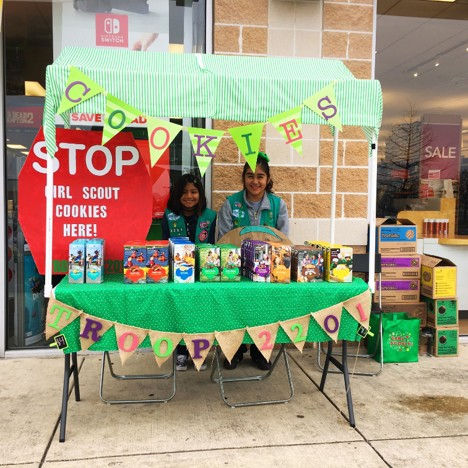
And then there's the format. Girl Scout Cookies come in small, stackable boxes that are practically built for gifting — a box of Thin Mints is a perfect, no-thought teacher gift, coworker thank-you, or "just because" drop-off, priced low enough that it never feels like a big gesture. Try doing that with a $25 tin of popcorn; it stops feeling like a casual thank-you and starts feeling like an actual gift you have to think about. Add in the fact that cookies freeze beautifully, and you've got a product people can stock up on now and hand out for months, which only adds more reasons to buy extra boxes on the spot.
The Takeaway
None of this means popcorn is a bad fundraiser or that Boy Scout troops are doing anything wrong. It just means Girl Scouts stumbled into (or very deliberately built) a near-perfect low-friction sale: low price, real scarcity, an exclusive product, gift-ready packaging, and full-scale participation. It's a pretty good reminder that the way you ask for something can matter just as much as what you're actually selling.
Want to stay in the loop?
Pop your email in here and I'll send a roundup of what's new on the blog about once a week, plus you'll get access to the free Social Lifeline Ritual Guide, my simple approach to staying close to the people who matter, even when life gets full.
Wix SEO Package
Focus keyword: why Girl Scout Cookies sell so well
SEO Title: Why Girl Scout Cookies Outsell Boy Scout Popcorn (It's Not the Cookies)
Meta Description (159 characters): Girl Scout Cookies bring in nearly $1 billion a year — popcorn doesn't come close. Here's the pricing psychology behind why you always say yes.
URL Slug: /why-girl-scout-cookies-outsell-popcorn
Excerpt: You don't blink at $6 for Thin Mints but hesitate at $25 for popcorn. It's not about the product — it's pricing psychology, scarcity, and a sales structure Girl Scouts nailed by accident (or on purpose).
Image File Names:
girl-scout-cookies-vs-boy-scout-popcorn.jpg
cookie-price-tag-psychology.jpg
girl-scout-cookie-booth-sale.jpg
Alt Text:
"Comparison graphic of Girl Scout Cookie box next to Boy Scout popcorn tin"
"Price tag graphic illustrating impulse buy psychology"
"Girl Scouts selling cookies at a booth table"
Tags:
Girl Scout Cookies
Boy Scout Popcorn
Fundraiser Psychology
Pricing Psychology
Cookie Season


Comments