Losing Hair on Your Weight Loss Medication? This May Be a Fix You Haven't Considered.

Updated: Aug 24
This post contains affiliate links. As an Amazon Associate I earn from qualifying purchases — at no extra cost to you.
If you are on Ozempic, Wegovy, Mounjaro, Zepbound, or any other GLP-1 or tirzepatide medication — this post is for you. Ozempic gets most of the cultural attention but everything we are about to talk about applies across the entire category.
And before we get into solutions, can we just acknowledge the irony for a moment?
You are taking a medication specifically designed to help you eat less. And now your doctor, your nutritionist, every wellness article you find is telling you that you need to eat more protein, take more supplements, drink more water, and pay closer attention to your nutrient intake than you ever have in your life. Your appetite is gone. Your stomach fills up in three bites. And somehow you are supposed to hit your protein goals, keep your organs happy, protect your muscles, and prevent your hair from falling out.
It is a mind game. A genuine, exhausting, nobody-warned-me-about-this mind game. And the hair loss piece, that is the one that sends most women over the edge.
Here is what is actually happening. And here is what actually helps.
First — It Is Not the Injection
This is the most important thing to understand and the thing most people are never told before they start.
The hair loss associated with GLP-1 medications is not caused by the medication itself. It is caused by what happens when you eat significantly less, your body goes into a caloric deficit and begins prioritizing its resources. Your heart, kidneys, and liver come first. Your hair comes last.
Your body is not being cruel. It is being logical. But that does not make standing at the bathroom sink watching hair fall out any easier.
The medical term is telogen effluvium, a condition where an abnormal number of hair follicles get pushed into the shedding phase simultaneously. It is triggered by rapid weight loss, caloric restriction, and the nutrient deficiencies that follow. Research describes it as self-limiting, meaning it typically resolves within three to six months as weight stabilizes and nutrition rebounds. But those three to six months are real and they are hard, especially for women who already tie so much of their confidence and identity to how they look and feel.
The good news is that being proactive about nutrition makes a genuine difference. You cannot always prevent the shedding entirely, but you can absolutely minimize it.
The Nutrients Being Depleted — And Why Each One Matters
When you eat less you absorb less. These are the specific nutrients most commonly depleted on GLP-1 medications and what each one does for your hair — and your overall health:
Biotin — one of the most well-known nutrients for hair health and one of the first to get depleted during caloric restriction. Biotin supports the keratin infrastructure that hair is literally made of. Without enough of it, hair becomes brittle, thin, and prone to shedding.
B12 — essential for red blood cell production and oxygen delivery to hair follicles.
Deficiency causes fatigue, brain fog, and yes — hair loss. Some clinics are now offering monthly B12 injections specifically for GLP-1 patients because the depletion can be that significant.
Vitamin D — deficiency is extremely common in the general population and becomes even more pronounced during rapid weight loss. Vitamin D plays a direct role in the hair follicle cycle and low levels are consistently associated with increased shedding.
Iron — one of the most well recognized triggers for hair loss in women. When calories drop iron levels often follow, and hair follicles are among the first casualties of low iron.
Zinc — supports tissue growth and repair including hair follicle function. Deficiency disrupts the hair growth cycle and is commonly found in people experiencing rapid weight loss.
Protein — this one deserves its own mention because it is not a vitamin or mineral, it is the actual building block your hair is made from. Hair is approximately 95% keratin which is a protein. If you are not hitting your protein goals on a GLP-1 your body has nothing to build new hair with. Experts consistently cite protein deficiency as one of the biggest contributors to GLP-1 related hair loss and it is entirely preventable with intentional eating.
And then there is water. GLP-1 medications can suppress thirst alongside appetite which means dehydration sneaks up on people who are already eating and drinking less. Every cell in your body, including your hair follicles, needs adequate hydration to function.
The Muscle Loss Conversation Nobody Wants to Have
Here is the piece that does not get enough attention, especially for women in midlife.
Losing muscle is easy. Gaining it back is hard. And on a GLP-1 medication where appetite is suppressed and protein intake drops; muscle loss can happen faster than most people expect.
For women over forty who are already navigating the natural muscle loss that comes with hormonal changes, this is not a small concern. Muscle supports your metabolism, your bone density, your strength, your energy, and your long-term independence. Losing it quickly and then trying to rebuild it is a much harder road than protecting it in the first place.
This is why protein is not optional on a GLP-1. It is non-negotiable. Even when you are not hungry. Even when three bites fills you up. Even when the idea of eating more of anything feels completely contradictory to why you started the medication in the first place.
High-quality protein sources that are easy to consume in small quantities. Greek yogurt, eggs, cottage cheese, protein shakes, collagen powder in your morning coffee — become your best tools. Every gram counts.
Be One of the First to Benefit From This — There Is A Patch For That
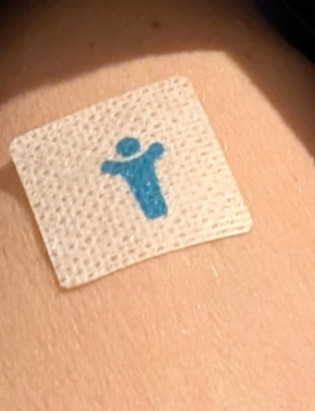
Every single nutrient on this list — biotin, B12, zinc, vitamin D, iron — is available in patch form.
Think about that for a moment. You are already navigating suppressed appetite, forcing down protein you do not want, managing a medication schedule, drinking water you are not thirsty for, and trying to take a growing lineup of supplements that your stomach may or may not tolerate well on minimal food intake.
A patch that sticks on your arm first thing in the morning and quietly delivers nutrients through your skin all day, bypassing your stomach entirely, is not just convenient. For someone on a GLP-1 it is genuinely one of the smartest decisions you can make.
Put it on in the morning. Go about your day. Let it work while you focus on hitting your protein and drinking your water. One less thing hanging over you. One less pill to force down on a stomach that does not want anything in it.
We talked about vitamin patches in depth in an earlier post, how they work, what the science says, who they work best for, and what to look for on the label. If you missed it go read that one too. The short version is this: patches work best for smaller molecules and specific nutrients, and biotin, B12, vitamin D, and zinc fall squarely in the category where patches show the most promising absorption results.
Everything Else That Actually Helps
Beyond patches and protein here are the other things experts consistently recommend for minimizing GLP-1 related hair loss:
Slow down if you can. The faster the weight loss the more significant the nutrient depletion and the more pronounced the shedding. If your doctor agrees a more gradual approach to dosing can help your body adjust without the shock of rapid loss.
Scalp massage. Research shows that regular scalp massage improves blood flow and therefore nutrient delivery to hair follicles. A few minutes daily with a scalp massager makes a measurable difference over time and costs almost nothing.
Collagen powder. A scoop in your morning coffee delivers protein and supports the keratin structure of your hair simultaneously. Easy, tasteless, and doing double duty. I personally use Primal Kitchen, vanilla coconut. Another very popular brand, with no taste, is Vital Proteins.
Topical minoxidil. Dermatologists consistently cite this as the most well studied and effective option for stimulating hair growth across many types of shedding including telogen effluvium. Available over the counter and worth discussing with your doctor or dermatologist.
Nutrafol and Viviscal. Both are clinically studied hair loss supplements with research behind them specifically for women. More expensive than basic supplements but with more evidence than most.
A Word About Water — This One Is Not Optional
This section deserves more than a gentle reminder because the stakes are higher than most people on a GLP-1 medication realize.
In May 2025 the FDA required every GLP-1 manufacturer — Ozempic, Wegovy, Mounjaro, Zepbound, Rybelsus, all of them — to add an explicit warning about dehydration-related kidney injury to their prescribing labels. This is not a minor footnote. This is the FDA saying clearly that severe dehydration on these medications can lead to acute kidney injury serious enough to require hospitalization.
Here is why it happens. GLP-1 medications work on the receptors in your brain that regulate both appetite and thirst — suppressing both signals simultaneously. You are not just less hungry. You are less thirsty. And when you are also experiencing nausea or vomiting as a side effect you are losing fluids without the normal alarm system telling you to replace them.
The risk is highest in your first weeks on the medication and after every dose increase when side effects tend to peak. Those are the windows that deserve the most attention and the most intentional hydrating.
The early warning signs of dehydration to watch for, especially since you may not feel thirsty, include darker urine, fewer than four- or five-bathroom visits per day, dry mouth, mild headache, and fatigue. If you experience persistent vomiting or diarrhea lasting more than 24 hours, very dark urine, significantly reduced urination, confusion, or rapid heartbeat with dizziness, contact your healthcare provider immediately. Those may indicate dehydration severe enough to affect kidney function.
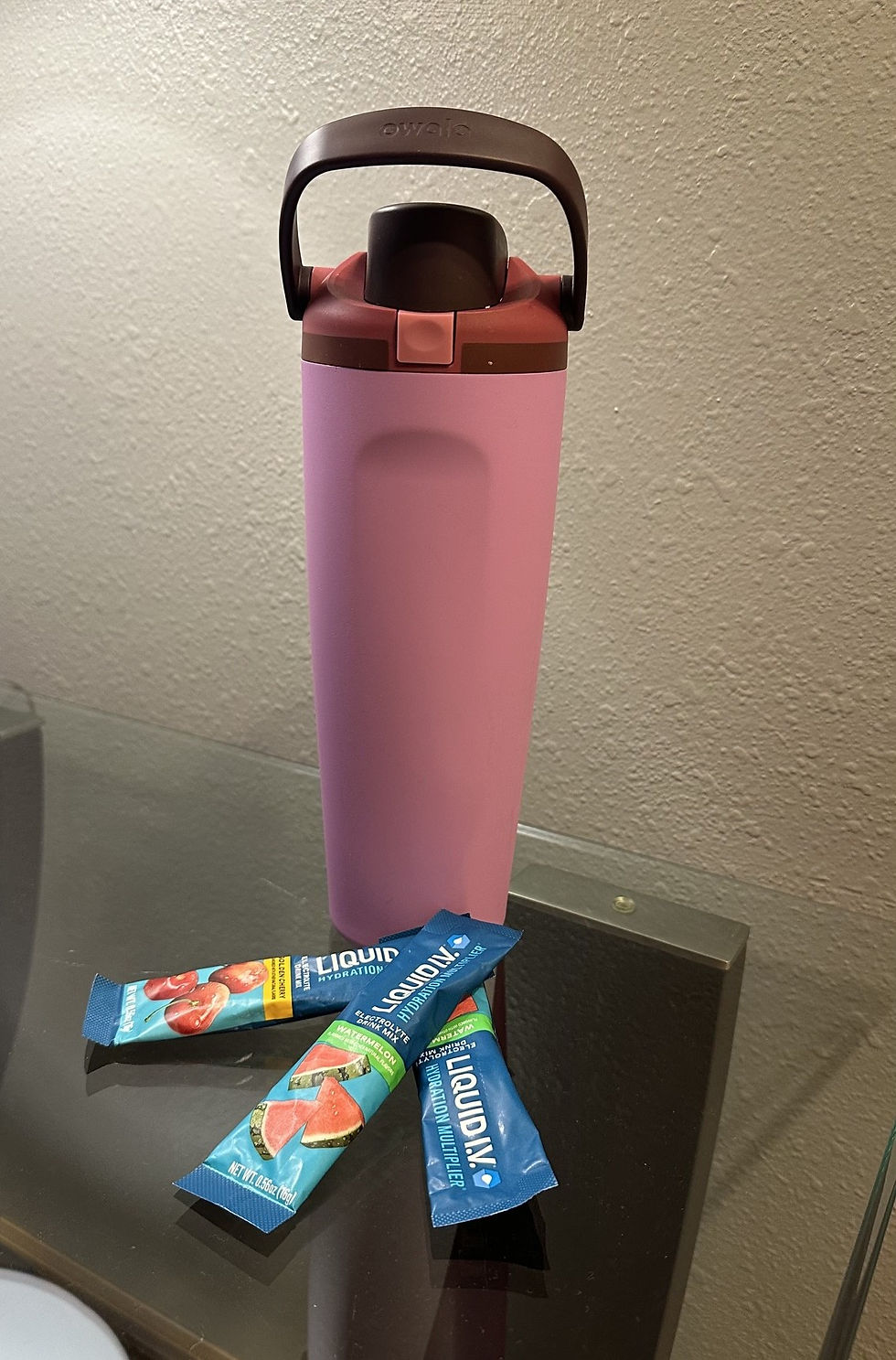
Plain water alone may not be enough on days when nausea, vomiting, or diarrhea are present. GLP-1 medications actually increase how much sodium your kidneys flush out, which means electrolyte replacement becomes genuinely important, not just a wellness trend. Choose zero sugar formulas specifically, sugar can worsen nausea which is already one of the most common side effects. LMNT, Ultima Replenisher, Liquid IV Sugar Free, and Nuun are all well regarded options that work well for GLP-1 users.
The practical fix is simple even when it does not feel urgent. Sip steadily through the day rather than gulping. Keep a large water bottle visible and within reach at all times. Set an alarm if you need to. On days with nausea or GI symptoms add extra fluids deliberately even when the last thing you want is more liquid.
A large, insulated water bottle is not a wellness accessory on a GLP-1. It is a medical tool. Treat it like one.
Talk To Your Doctor
Everything in this post is information, not medical advice. If you are experiencing significant hair loss on a GLP-1 medication talk to your doctor and ask specifically about checking your iron, zinc, vitamin D, and B12 levels. A simple blood panel can tell you exactly where your deficiencies are so you can address them directly rather than guessing.
Your doctor may also have specific supplement recommendations or be offering B12 injections as some clinics now do for GLP-1 patients. Ask. You deserve a proactive conversation about this, not just reassurance that it will probably stop eventually.
The Bottom Line
The hair loss is real. The nutrient depletion is real. The mind game of needing to eat more while taking a medication specifically designed to help you eat less is real and it is exhausting and the conversation most doctors are not having with their patients before they start.
But here is what is also real, this is temporary for most people. Hair regrows. Nutrition rebounds. And being proactive right now makes the road shorter and less dramatic than doing nothing and hoping for the best.
Patch on. Protein in. Water bottle full. You have got this.
Want to stay in the loop?
Pop your email in here and I'll send a roundup of what's new on the blog about once a week, plus you'll get access to the free Social Lifeline Ritual Guide, my simple approach to staying close to the people who matter, even when life gets full.


Comments